Currently there are no women in Formula One or Two and there is only one female driver in Formula Three.
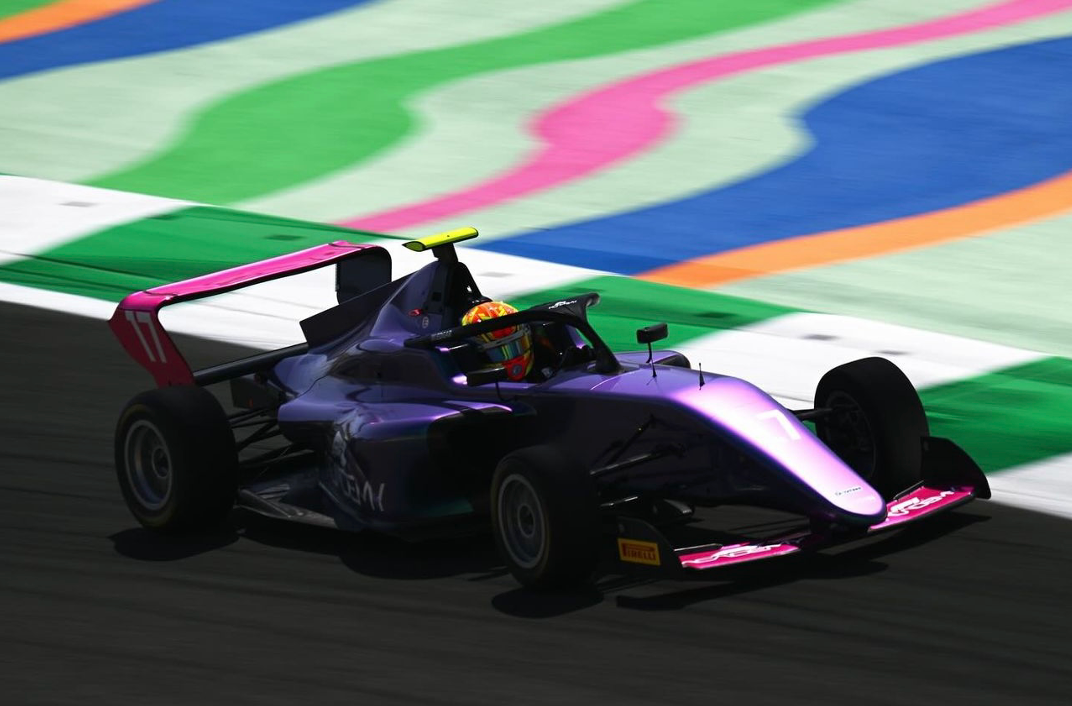
Jessica Edgar at the first F1 Academy weekend in Jeddah, Saudi Arabia, in March 2024. Image Credited to ‘_jessedgar’ Instagram.
In a study conducted by More Than Equal, an initiative run by ex-driver David Coulthard, to find and develop the first female F1 World Champion, they dissect and investigate gender participation and the performance gap in motorsport.
Identifying that ‘female participation currently represents on average 10% across all categories of competition,’ with ‘karting making up 40% of overall female participation,’ the gender disparity is clear. Whilst female participation is improving in karting, it is not developing into racing at higher levels.
Speaking to F1 Academy driver, Jessica Edgar, I asked her about her experience of being a young woman in racing and how she felt being one of few female drivers.
Growing up in a racing family, Edgar was supported from an early age with an experienced base behind her. ‘I think it helps a lot having a family that knows how things work,’ she commented. ‘I grew up with all boys when I was four years old, so that’s what I was used to.’
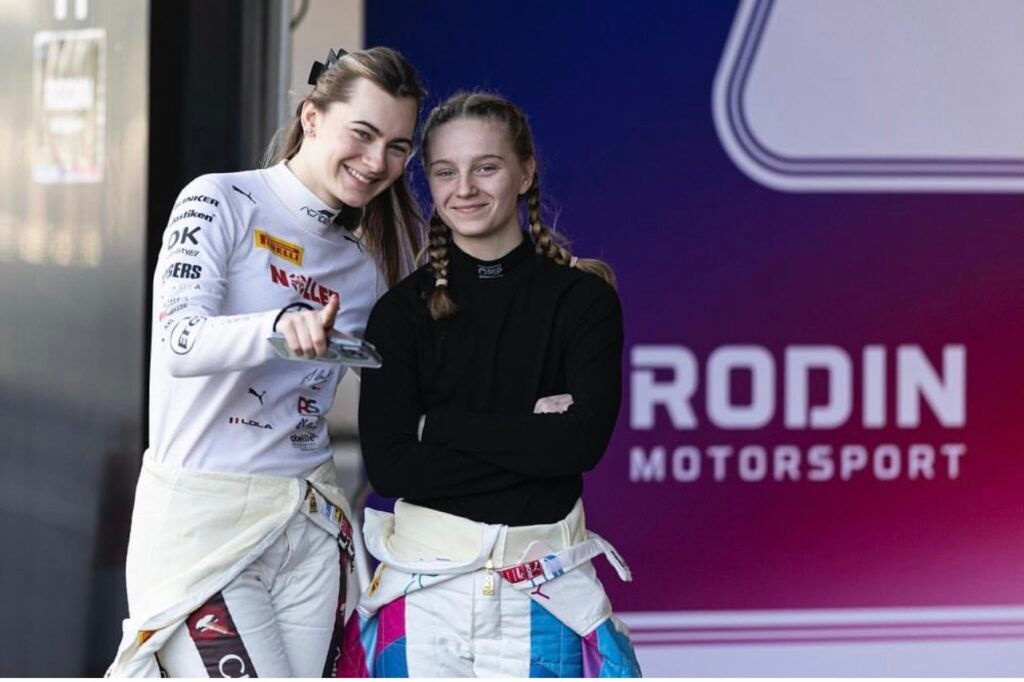
Jessica Edgar with fellow F1 Academy driver Lola Lovinfosse. Image taken in February 2024 in Jeddah, Saudi Arabia. Image Credited to ‘_jessedgar’ Instagram.
Explaining that her upbringing differed from others she acknowledged the influences of her childhood. ‘Girls like princess and boys like cars… girls don’t think about like, oh, there’s motorsport. But because I grew up with my dad racing, I had cars instead of princesses.’
While gender stereotypes are changing, the process is slow and will likely not impact new generations for years to come.
More Than Equal further identified some of the reasons as to why motorsport drops off in teenage years. ‘Inadequate track time and inferior access to female specific technical and tactical training’ at an early age, were among the reasons for the decline in participation.
As a whole it is clear that women are taken less seriously within the industry. With 50% of respondents to the More Than Equal survey responding that they knew that women could compete in F1, yet 82.3% classing themselves as avid fans, the interest in female participation is low.
Throughout the survey there was a clear disparity between female and male opinions, with men caring substantially less than their female counterparts. Identifying the drop off of female participation in elite series, the research focusses on why a women’s driving career only lasts on average five years compared to men who compete for an average of twelve years.
Discussing the perceptions of biological differences, Jessica argued against the expectations that women cannot or shouldn’t race. ‘I think I’m probably supposed to say that its harder, but I feel it isn’t any different. I think men are always stronger. They’re bigger, stronger naturally. But I think if you train hard enough in the gym, you can be fit enough to drive the car that you want to drive.’
Sophia Floresch is one of the few female drivers currently in a mixed formula series. Most women feature in F1 Academy, an exclusively female racing championship with its inaugural season in 2023.
Looking into other racing series, Sophia Floresch races in Formula Three. The twenty-three-year-old German driver is the lone woman driving in the thirty-car series. Driving with identical cars Floresch finished twenty third in the 2023 season. Unless drastic changes are made, it appears Floresch will not progress to Formula Two in the near future. ‘I think everyone wants to be a Formula One driver, but it’s quite unrealistic,’ said Edgar. Whilst her comment may sound pessimistic it is important to remember that Formula One consists of the top twenty drivers from around the world and is incredibly difficult to be selected to drive for a team regardless of gender.
Similarly to F1 Academy, W Series features an all-female grid but was liquidated in its third year due to lack of funding. In 2019, 2021 and 2022 the championship consisted of ten races, and was dominated all three years by Jamie Chadwick.
Chadwick, currently driving in her ninth series, Indy NXT, is often considered the best hope for women in Formula One. Starting her career at the age of eleven, relatively late for many drivers, she took the racing world by storm and became the face of women in motorsport.
In February 2024 Chadwick launched her all-female karting competition to help increase participation at a grassroot level. Commenting on the lack of racing support in karting Chadwick noted how initiatives such as F1 Academy are great, but women need to be able to get there, which is where karting comes in.
All drivers start at karting level. From the age of eight, drivers race in single seater karts and work their way up the series from there. Agreeing with Chadwick, I noticed the lack of early inclusion for women into motorsport. F1 Academy is amazing, but you can’t get there without years of experience prior, so who’s helping the younger drivers?
Mentioning how the media perceives and often deters girls from racing, Jessica commented on the ‘keyboard warriors.’
‘Comments are usually on social media. I think it’s a bit like your keyboard warrior sort of people, and one person makes a comment, then other people jump on the bandwagon.’
With social media becoming a primary tool of navigation regarding entrance to the motorsport industry, the online community has a large influence on its audience. In motorsport, perception has become everything.

Leave a Reply